洋·洋
2026.9.11 - 10.10
个展,泰康美术馆彩排间项目,北京
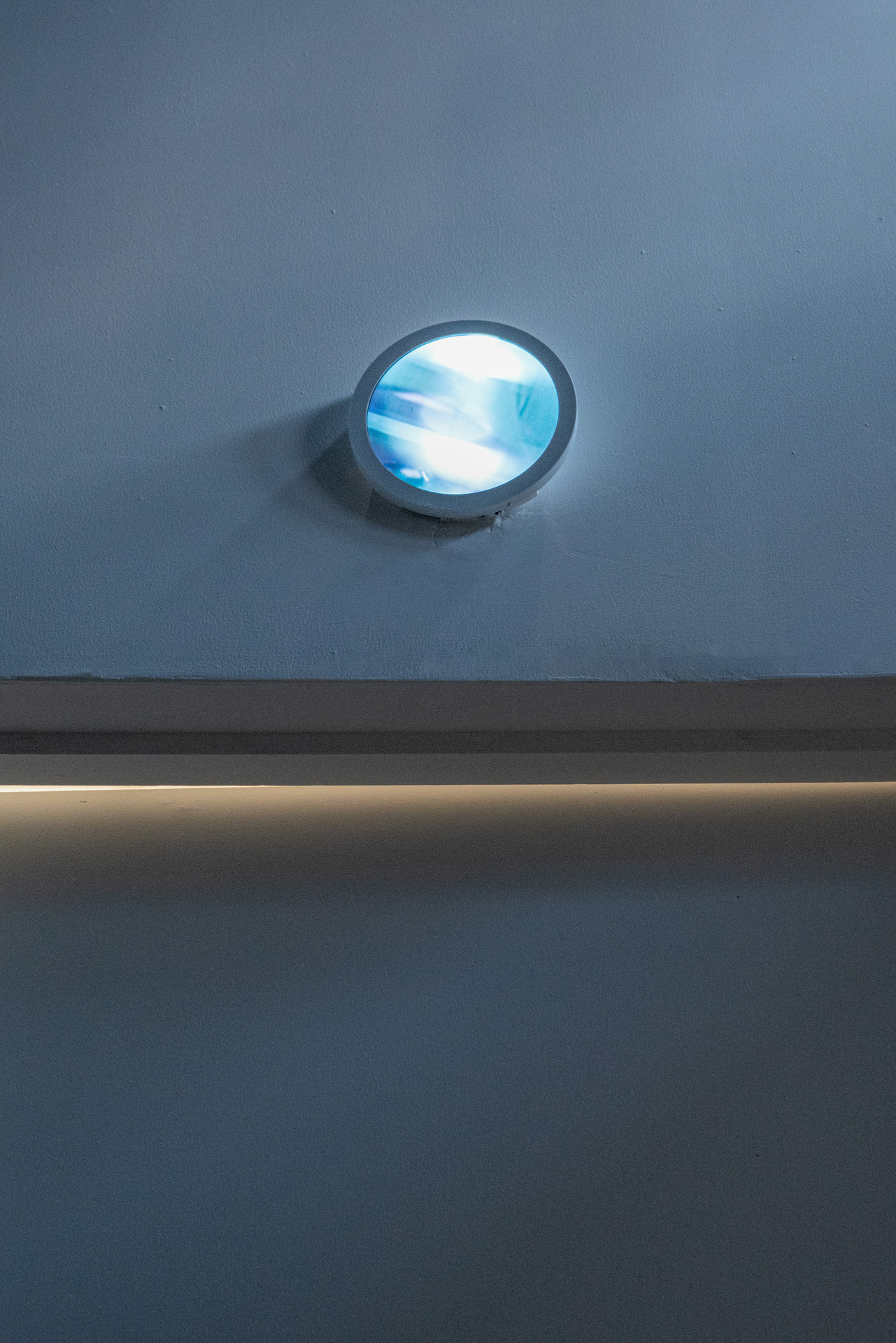
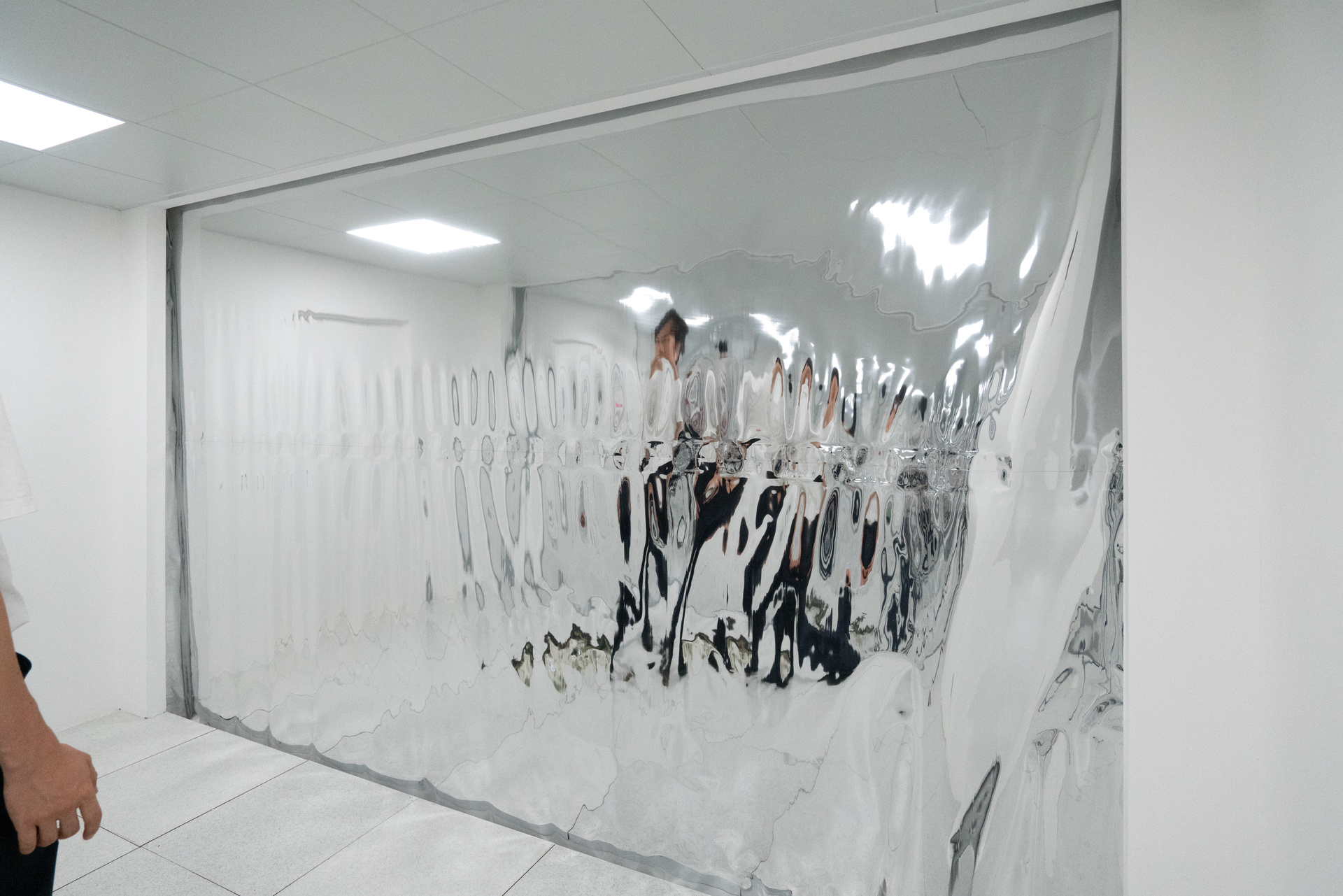
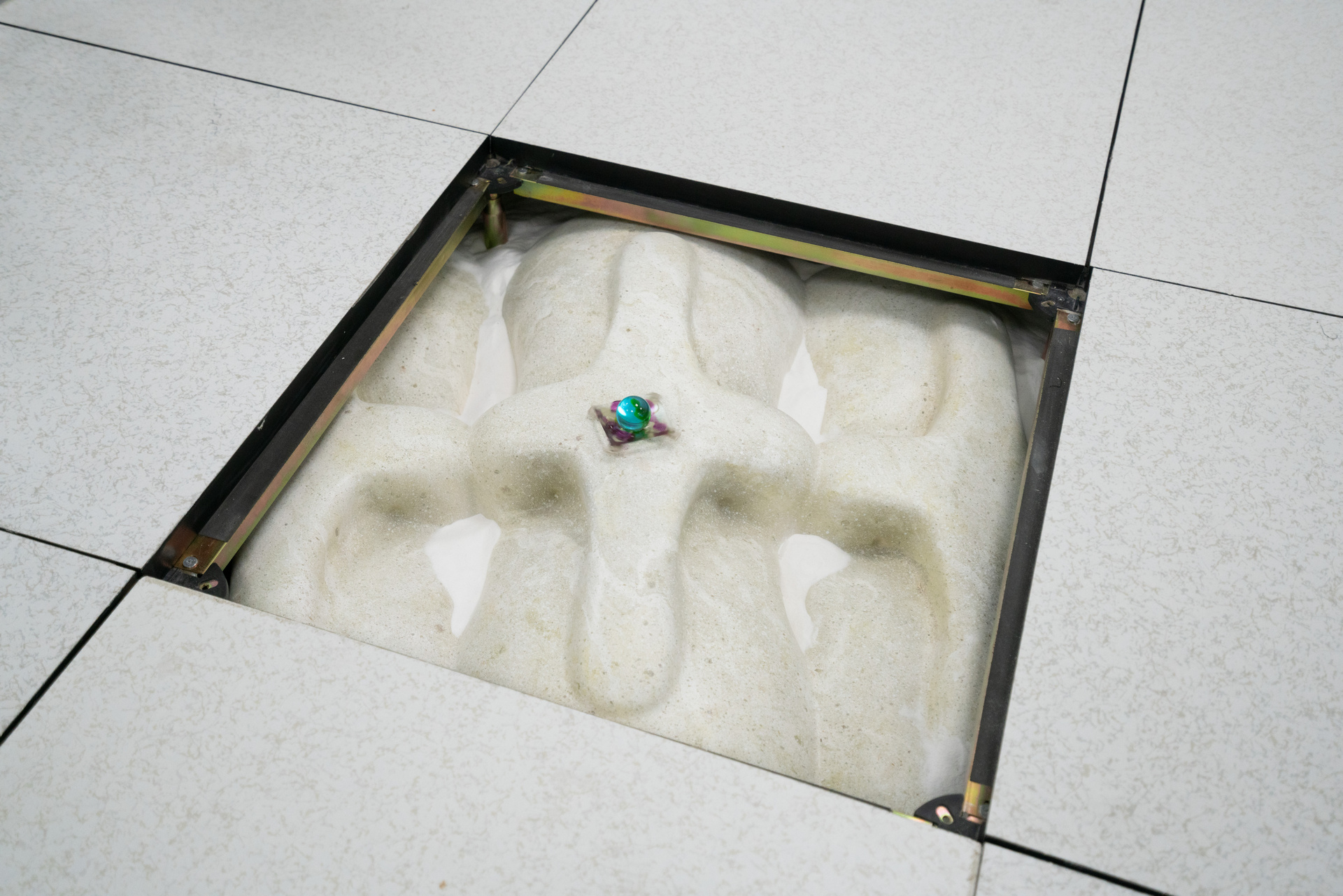
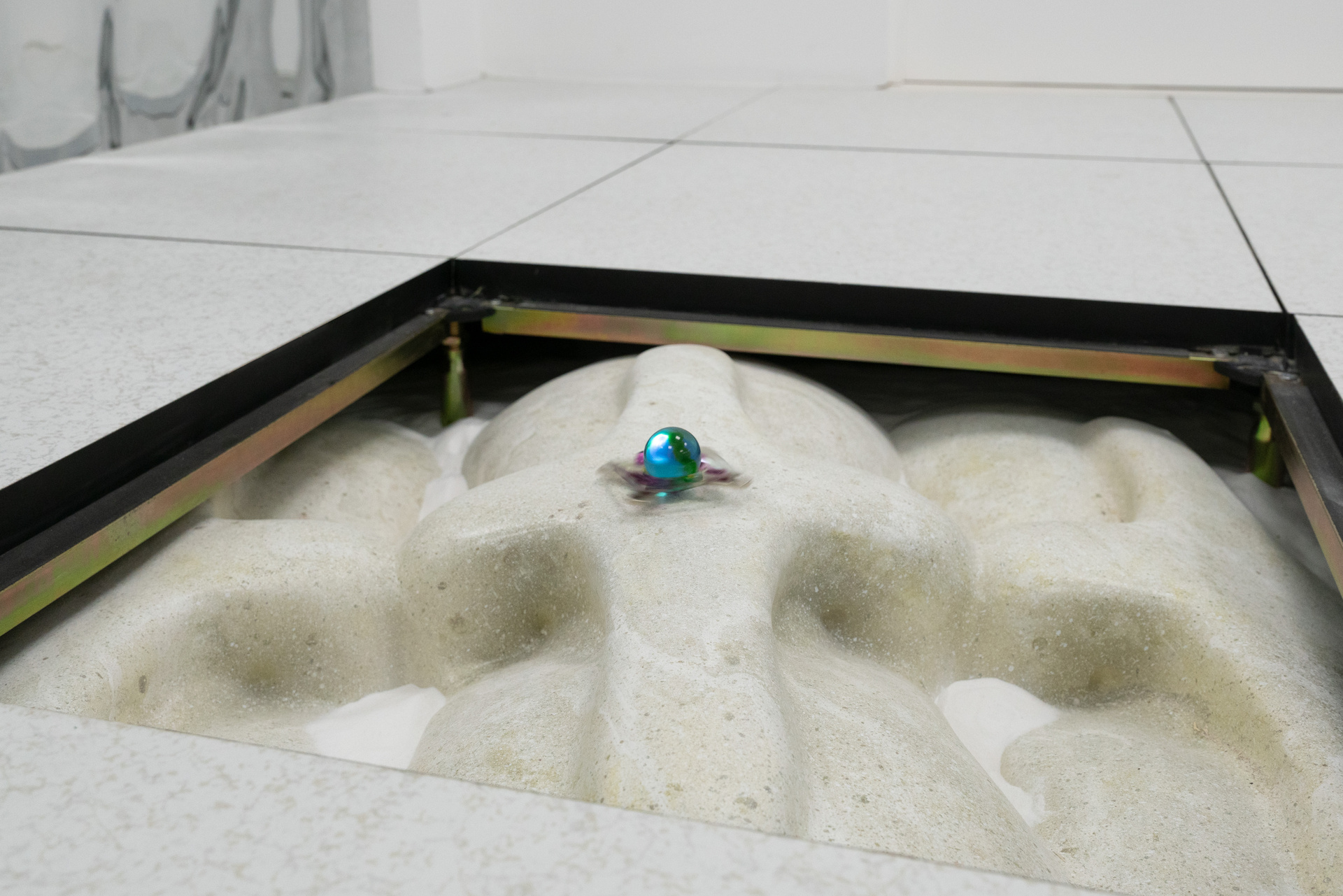
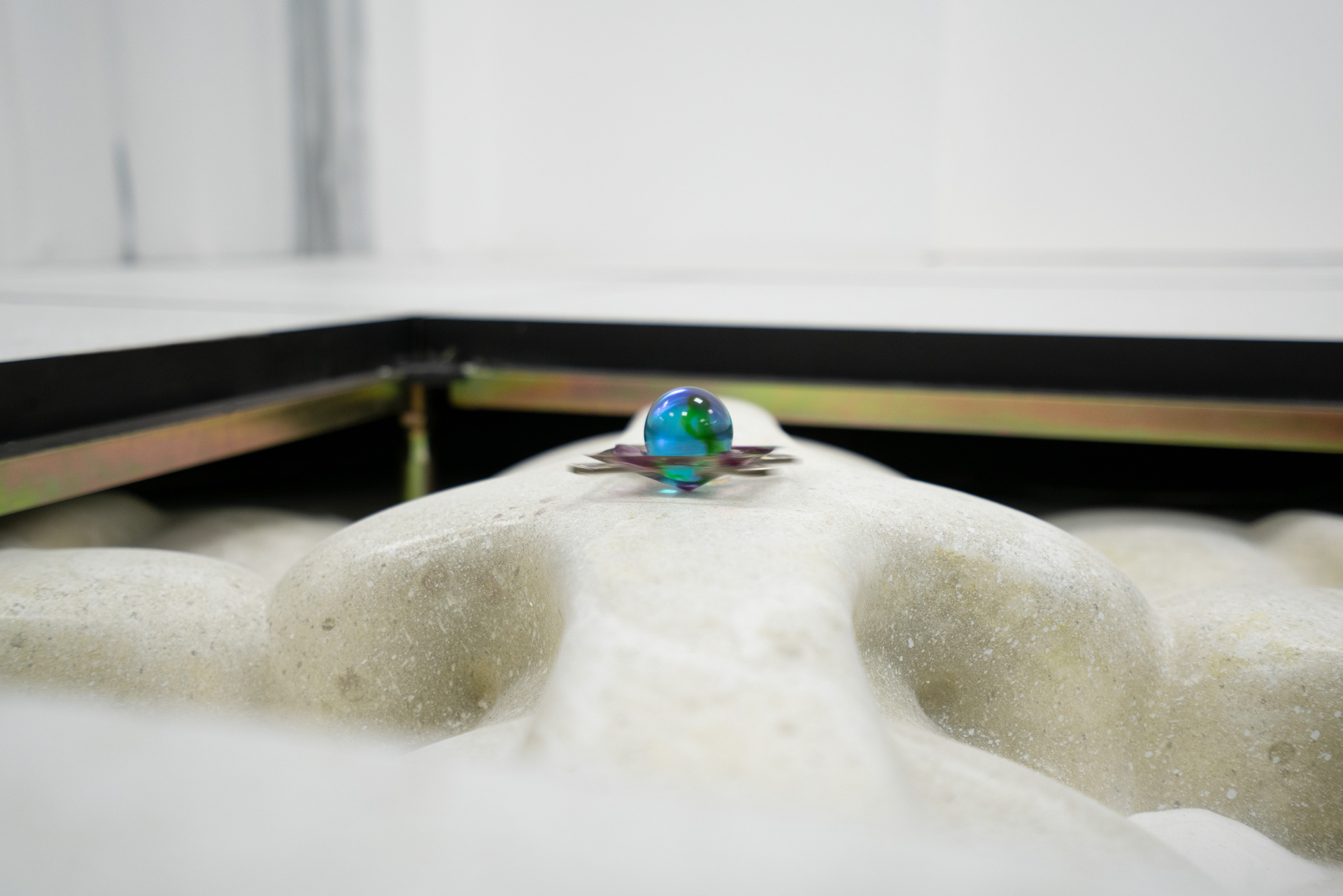
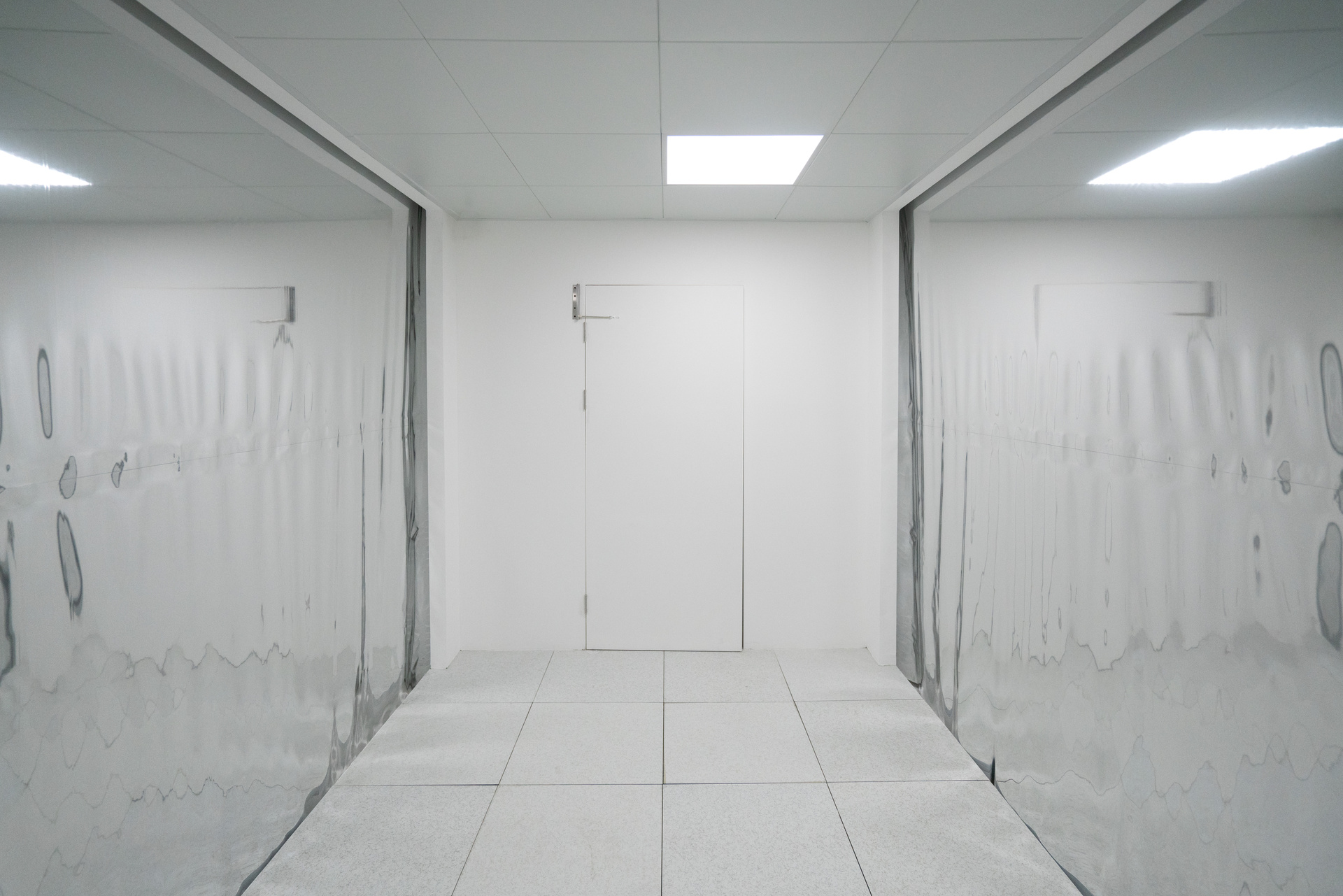
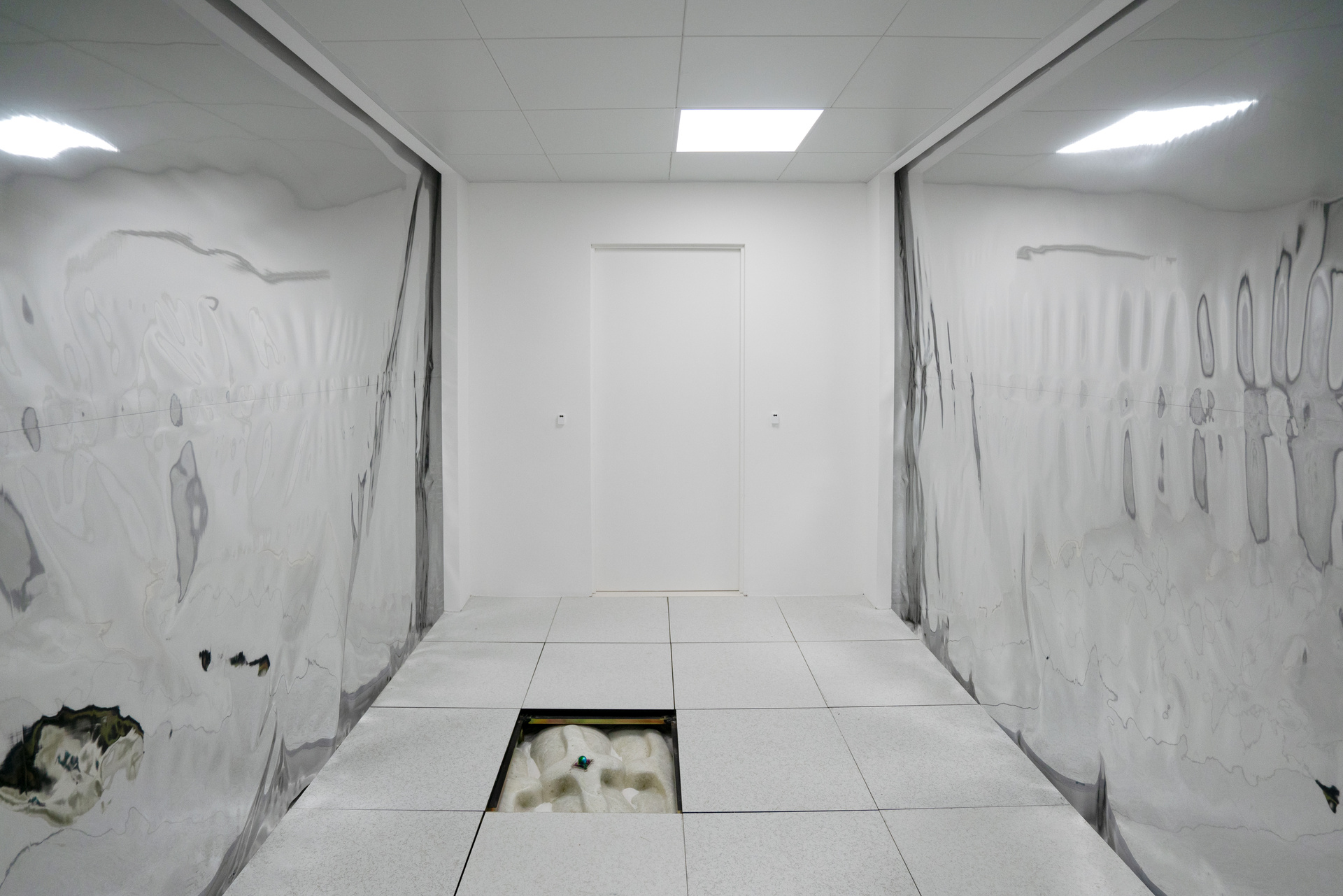
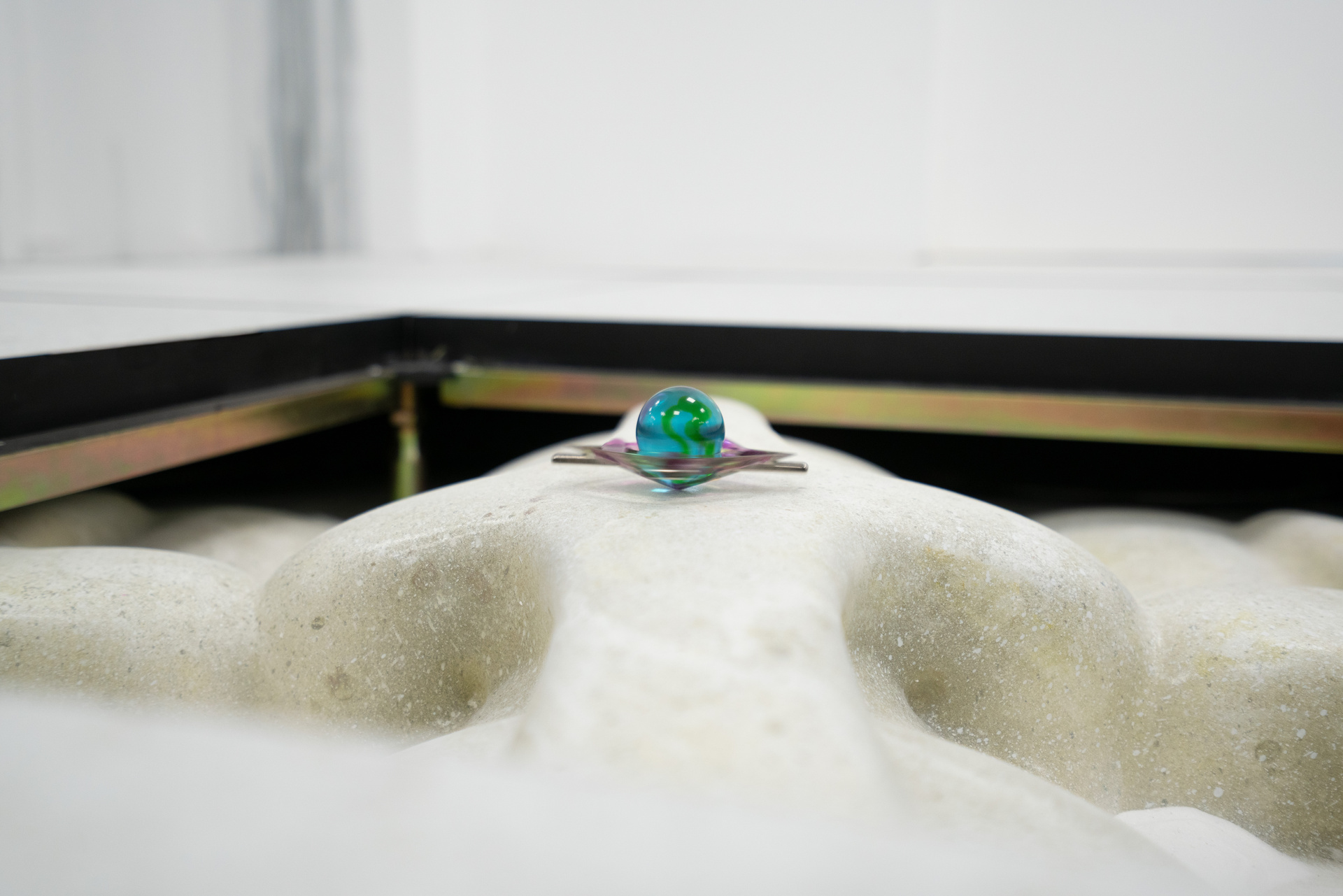
“洋洋”见于《诗经·卫风·硕人》中的“河水洋洋,北流活活”,形容水势盛大而流动的状态。作品将这一叠词拆为“洋·洋”:两个“洋”与空间中两面相对的镜面布料所形成的两片“水体”相对应,中间的间隔号则在原本连续的词语中制造出一个可见的停顿与间隙,同时也在视觉上呼应位于两片“水体”之间的珠状旋转物。
珠状旋转物取意于清代宣鼎文言小说集《夜雨秋灯录》中的《石郎蓑笠墓》。故事中,石郎救下一只搁浅的大蚌,它原是龙王世子所化,因此获赠一颗“辟水珠”。此后,石郎常携珠出入海中,也因此引来旁人的觊觎。一次争夺中,为了不让珠被抢走,他将珠含入口中,最终噎死。
在故事中,辟水珠作为一种能够改变身体与环境关系的“技术物”,使原本无法进入的水下环境成为身体可以行动的空间。对珠的欲望,也指向它所赋予的能力:突破身体原有的限制,重新组织人与周围世界之间的联系。
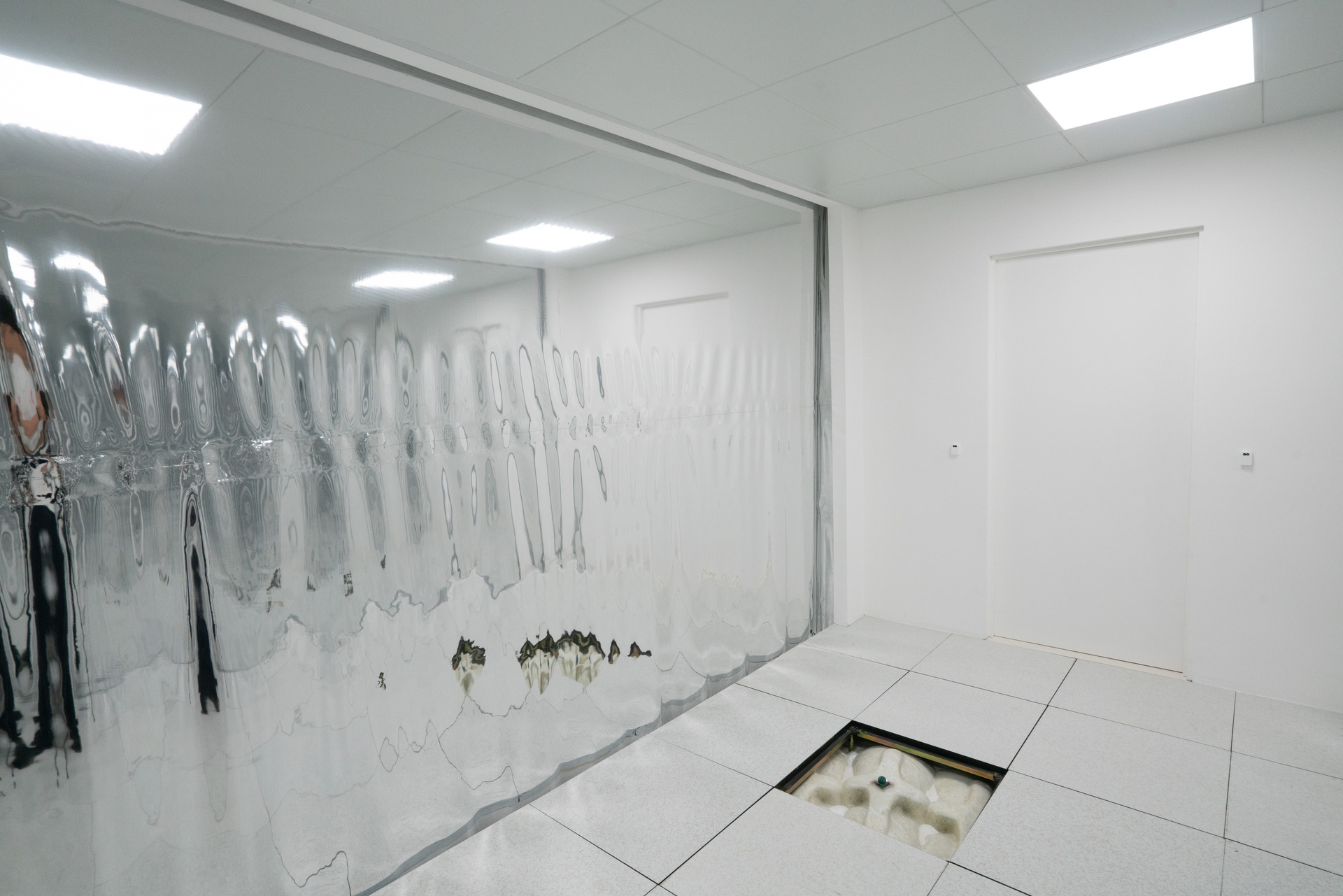
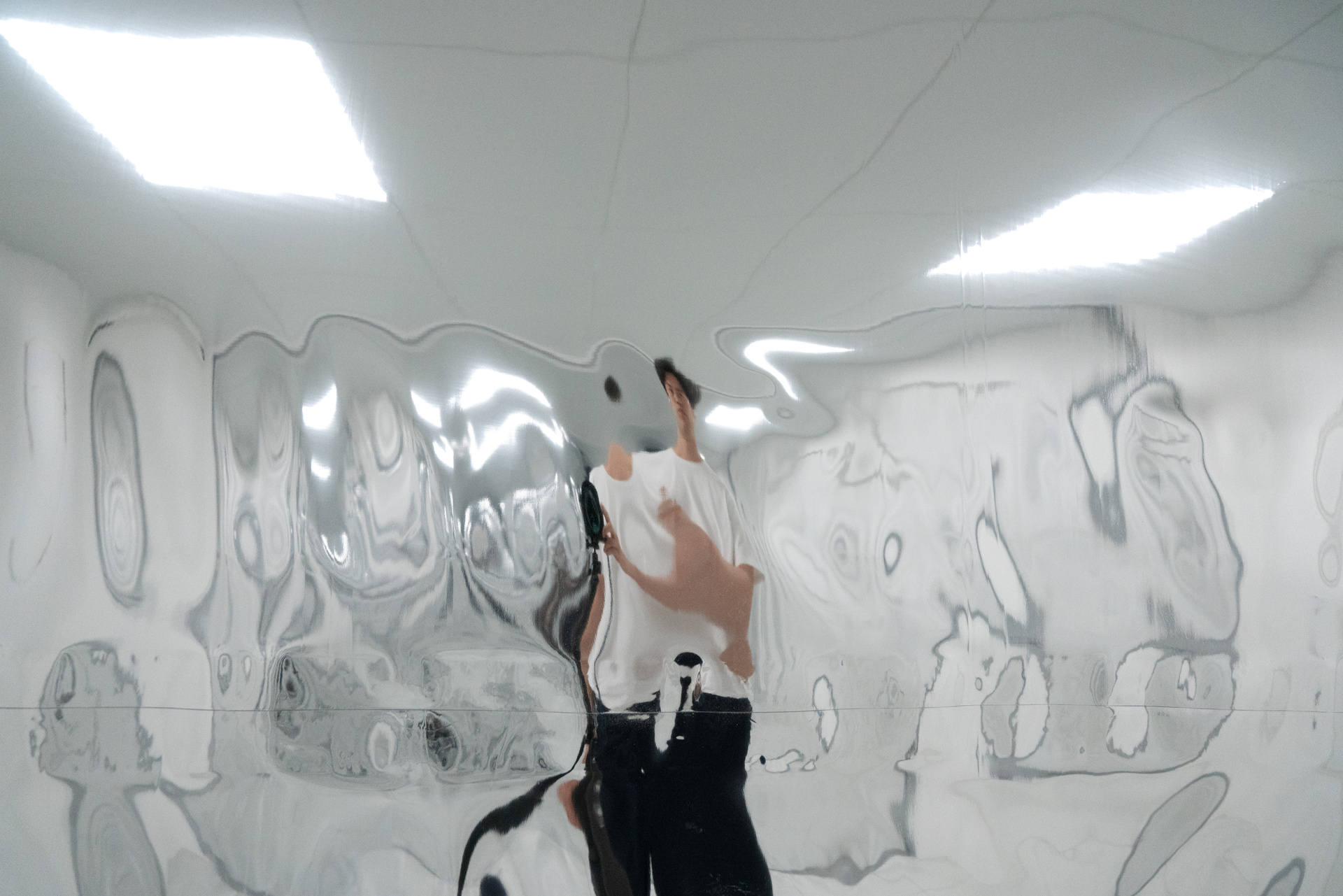
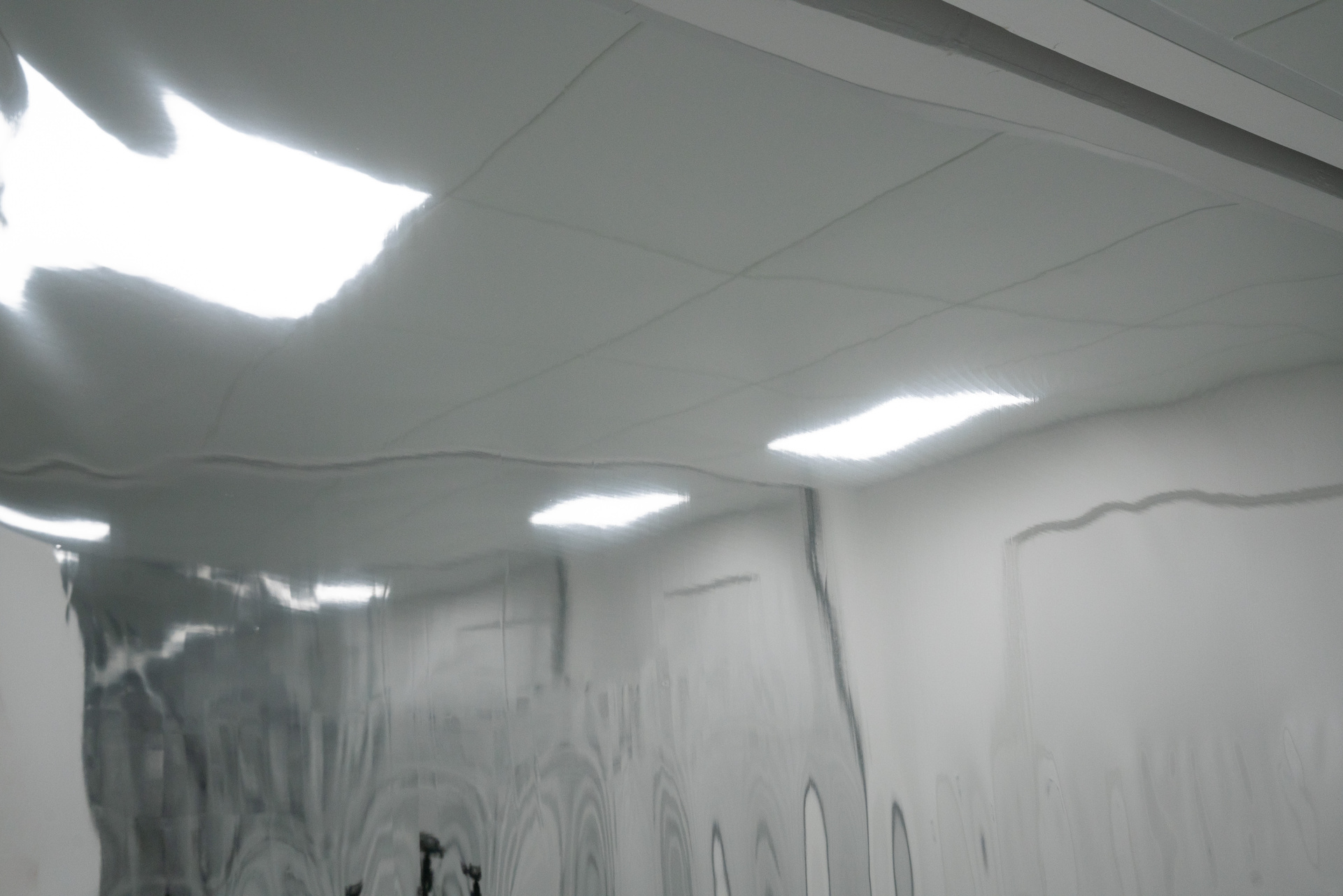
观众进入作品后,两片相对的镜面布料持续起伏,周围空间与观众自身的倒影随之变形、重复和延展。实际有限的空间不断改变其被感知的尺度与深度。技术物在这里进一步作用于感知关系:身体所在的位置保持不变,距离、方向与空间边界却持续发生变化。两片镜面之间由此形成一种持续变化而又不稳定的阈限状态。
英文名 Current·Current 延续了《洋·洋》中重复与间隔的结构。Current 指向海水、涟漪、持续旋转与流动,也包含“当前”与“当下”的含义。中间的“·”构成一处切分,并在视觉上再次呼应中央的珠状物;而“当下”本身,则在镜面布料持续的运动、重复与反射中被不断拉长。
Current· Current
11 Sep. - 10 Oct. 2026
Solo Show, Rehearsal Project at Taikang Art Museum, Beijing
The reduplicative expression yangyang (洋洋) appears in “Shuo Ren” (碩人), from the “Airs of Wei” (衛風) section of the Book of Songs, in the lines: “The waters of the He, wide and deep, / Flow northwards in majestic course.” (trans. James Legge). Here, yangyang describes water as expansive and in motion.
The installation separates the expression into Yang·Yang (洋·洋). The two instances of yang correspond to the two bodies of “water” formed by the opposing mirrored fabric surfaces. The centered dot introduces a visible pause and gap into what was originally a continuous expression, while also visually echoing the pearl-like spinning object positioned between the two “bodies of water.”
The spinning object draws on the “water-parting pearl” (辟水珠) in Shilang Suoli Mu (石郎蓑笠墓, literally “The Tomb of Shilang’s Straw Cape and Hat”), a tale from Xuan Ding’s Qing-dynasty collection Yeyu Qiudeng Lu (夜雨秋灯录). In the story, Shilang rescues a giant clam stranded on shore, which is in fact the transformed son of the Dragon King, and receives a water-parting pearl in return. Carrying the pearl allows him to enter and leave the sea, but it also attracts the desire of others. During a struggle over the pearl, he puts it into his mouth to prevent it from being taken and eventually chokes to death.
In the story, the pearl functions as a technical object capable of altering the relation between body and environment, making an otherwise inaccessible underwater world available to human action. The desire directed toward it also concerns the capacity it grants: to exceed bodily limits and reorganize the relation between a body and its surroundings.
As viewers enter the installation, the two mirrored fabric surfaces continuously undulate. Reflections of the surrounding space and of the viewers themselves deform, repeat, and extend. A physically limited room begins to shift in perceived scale and depth. Here, the technical object further acts on perception: the body remains in place while distance, orientation, and spatial boundaries continue to change. The space between the two mirrored surfaces thus becomes an unstable and continuously shifting threshold.
The English title Current·Current carries forward the structure of repetition and interval found in Yang·Yang. Current refers to water, ripples, continuous rotation, and flow, and also carries the meaning of the present moment. The centered dot creates a division while visually echoing the pearl at the centre of the work. The sense of the present is stretched through the continuous movement, repetition, and reflection of the mirrored fabric.